
Skills Development Scotland announced the winners of its 2026 research poster competition across three categories at the annual networking event at the University of Strathclyde on 11 September. Sixteen PhD students from across Scotland entered posters focused on skills and careers topics. Here, the winners share the rewards and challenges of creating their posters and the next steps in their research. All poster entries can be viewed on the SDS website.
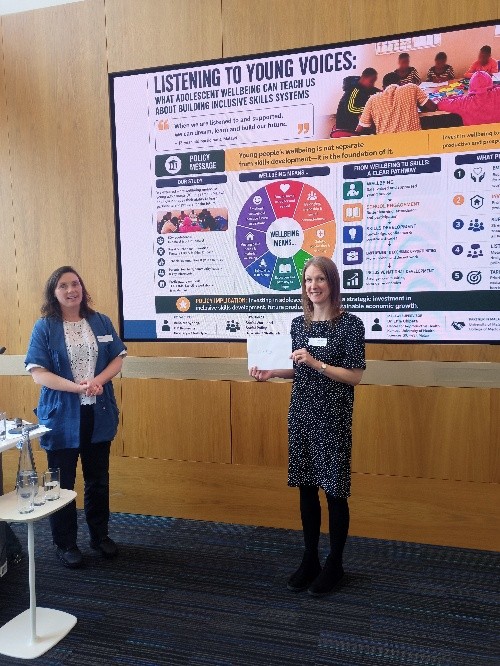
Velia Manyonga
University of Strathclyde
Listening to young voices. What adolescent wellbeing can teach us about building inclusive skills systems
When creating your research poster, what was the biggest challenge and what did you enjoy the most?
The biggest challenge was explaining a complex study clearly in limited space while keeping young adolescents’ voices central. I most enjoyed showing visually why listening to young people matters for wellbeing and inclusive skills systems.
What’s next in your PhD research?
With data collection complete in Blantyre and Mchinji, Malawi, I am analysing the findings and writing my thesis on how young adolescents understand wellbeing, the challenges they face and the support they value.
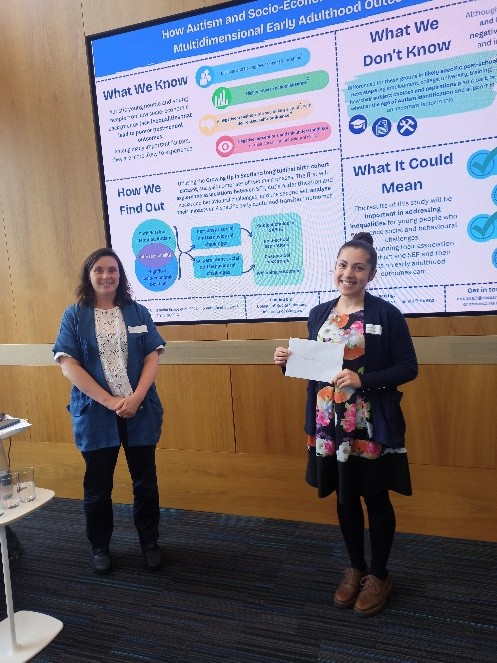
Lizzy Strang
PhD Student, University of Glasgow
How autism and socio-economic position shape multidimensional early adulthood outcomes
When creating your research poster, what was the biggest challenge and what did you enjoy the most?
The biggest challenge was reducing a text-heavy draft to short, clear sections without losing meaning. Focusing on what we know, what we do not know, how we find out and the impact helped. I most enjoyed developing the colours and layout; visual accessibility matters to me because people close to me are neurodivergent and colourblind.
What’s next in your PhD research?
Next, I will explore key relationships in the data and assess how wider research applies in the Scottish context.
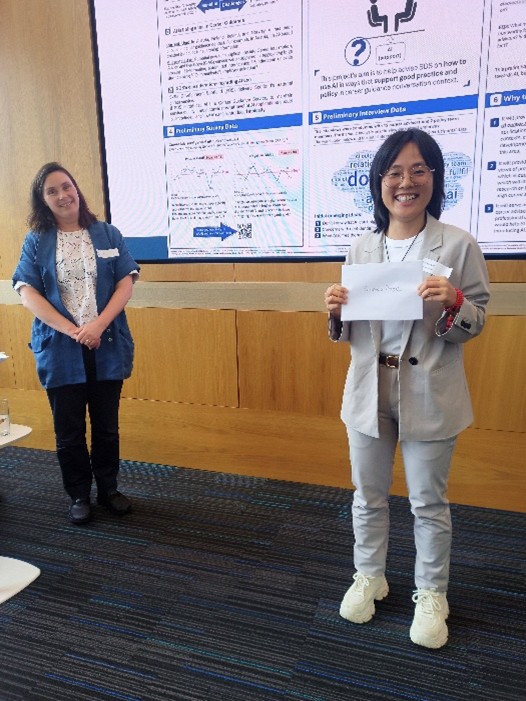
Ruimei Jiang
PhD Student, University of Aberdeen
AI’s applications in career guidance conversations
When creating your research poster, what was the biggest challenge and what did you enjoy the most?
The biggest challenge was choosing accurate, engaging content while analysis was still underway, without overstating uncertain findings. Feedback from academic and non-academic audiences helped me find the right balance. I most enjoyed collaborating with my supervisors and sponsors to strengthen the design and message.
What’s next in your PhD research?
I will complete the remaining interview analysis, then conduct systematic reviews on AI policy in career guidance, technology and human–AI interaction to support SDS practice and policy. This will be followed by psychological experiments on human–AI interaction.


